
New Construction in Stone Oak for Military Buyers

Military buyers in Stone Oak need to protect their interests from lot selection through final walkthrough by hiring independent inspectors, understanding Texas warranty law, aligning build timelines with PCS orders, and leveraging VA and Texas VLB loan benefits before signing a builder contract.
What do military buyers need to know about new construction in Stone Oak?
Stone Oak new construction can be a strong move for military buyers, but the builder's contract, lot selection, warranty structure, and financing timeline all require careful attention. Texas eliminated its state new-home warranty commission in 2009, so your protections come from your private contract, the Texas Residential Construction Liability Act, and how well you document every stage of the build. For buyers on PCS timelines, getting these details right from day one is the difference between a smooth move-in and a costly problem you're managing from across the country.
Key Takeaways
- Texas eliminated its state new-home warranty commission in 2009; new-construction buyer protections in Stone Oak come from private builder contracts and the Texas Residential Construction Liability Act (Tex. Prop. Code §27.004).
- The Texas Veterans Land Board raised its maximum home loan amount to $832,750 in January 2026, making VLB financing a viable option for most Stone Oak price points.
- Military buyers should schedule independent third-party inspections at pre-drywall and pre-closing stages, the builder's inspector works for the builder, not for you.
- If you receive PCS orders mid-build, having a trusted local representative (agent, spouse, or power of attorney) is essential for walkthroughs, punch lists, and remote document signing.
- Lot choice in Stone Oak's hilly terrain directly affects drainage, foundation demands, and resale appeal, this decision deserves more time than most buyers give it.
How does the Stone Oak new-construction process work for military buyers?
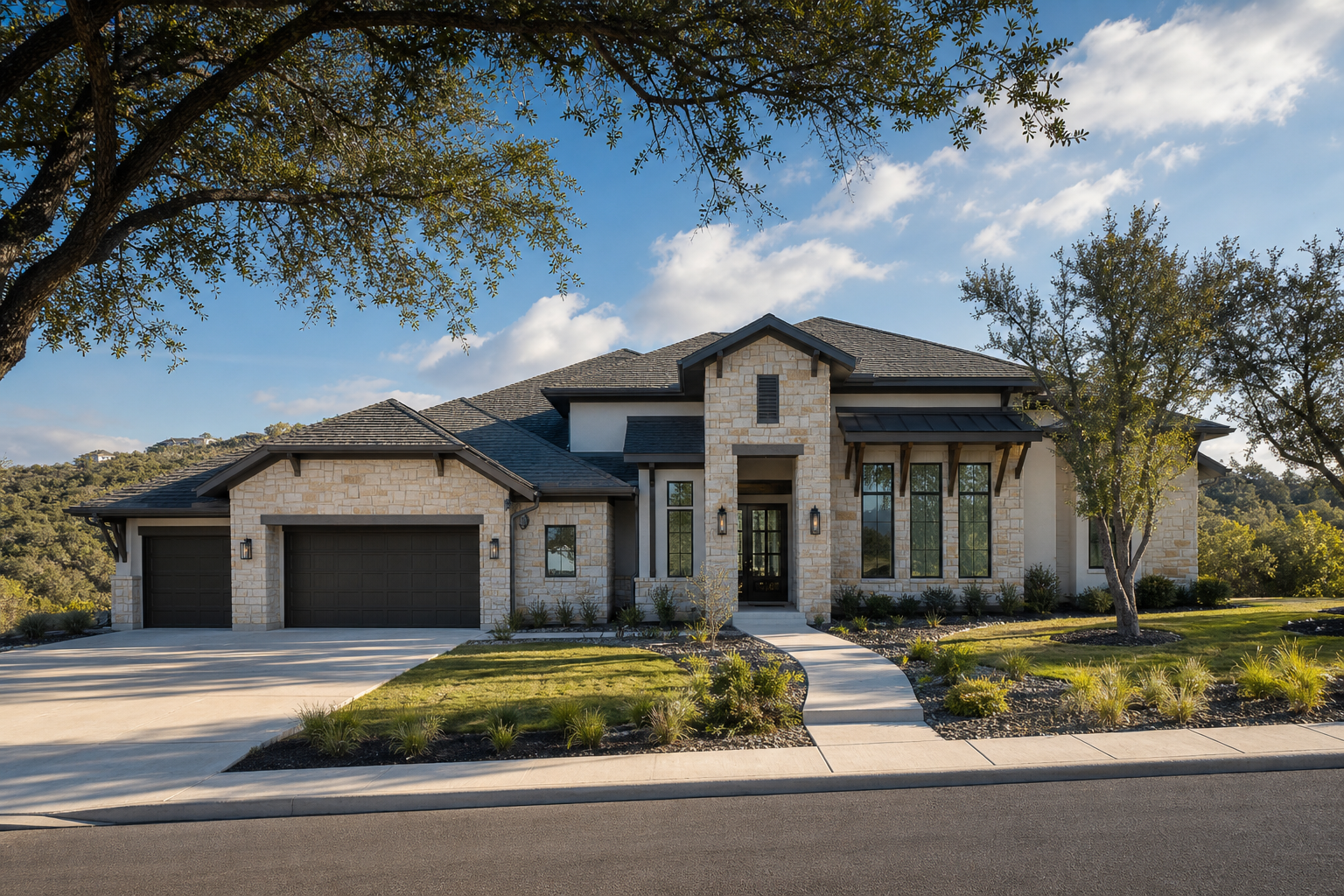
Stone Oak sits in far north San Antonio along US-281 and Loop 1604, and it's one of the most active new-construction corridors in the city. Master-planned communities here typically feature gated access, HOA-regulated design standards, and build times that can run several months from contract to closing. For a military buyer, that timeline is both an asset and a risk.
The asset: you can lock in a price before you arrive and potentially close right around your report date. The risk: a lot can go wrong between signing a contract and getting keys, and if you're deployed or stationed elsewhere during the build, you need someone protecting your interests on the ground.
I build the entire process around my clients' report dates. That means we work backward from when you need to be in the home, figure out which communities have realistic completion windows, and identify which builders have a track record of hitting their estimates. That last point matters more than most buyers realize, a builder who runs three months late can blow up your BAH, your lease, and your household's school year all at once.
Lot selection: the decision that shapes everything else
Lot selection is where most buyers spend the least time and where the long-term consequences are the biggest. In Stone Oak's hilly terrain, the lot you choose affects drainage, foundation demands, outdoor usability, and how the home will show when you eventually sell.
Here's what I walk every buyer through before they pick a lot:
- Slope and drainage: A lot that slopes toward the home rather than away from it can mean foundation or moisture issues down the road. Ask the builder how they're grading the lot and where water flows during heavy rain.
- Lot premiums: Cul-de-sac, greenbelt-backing, and oversized lots carry builder-set premiums that are entirely contractual. They're not regulated, and they can shift quickly with demand. Know what you're paying for and whether it adds resale value.
- Proximity to amenities: A lot near the community pool or park sounds great until you realize it also means traffic, noise, and extra foot traffic past your yard. If you're planning to rent the home during a future PCS, that trade-off looks different than if you're planning to sell.
- Corner vs. interior: Corner lots offer more yard space but less privacy and sometimes more maintenance. Interior lots in gated Stone Oak communities tend to feel more private and are often easier to maintain when you're TDY.
Builder contracts: what you need to review before you sign
Builder contracts are written by the builder's lawyers to protect the builder. That's not a criticism, it's just the reality, and it means you need someone reviewing that contract on your behalf before you put any money down.
A few things I flag in every Stone Oak builder contract:
- Change-order procedures and costs: Upgrades and changes after the contract is signed almost always cost more than the same selection at the design center. Understand the process and the markup before you start customizing.
- Completion date language: Most builder contracts give a range, not a hard date, and include force-majeure clauses that let them extend without penalty. If your PCS orders have a specific report date, you need to negotiate how this is handled.
- Inspection access: Some builders limit when and how a third-party inspector can access the property. Confirm your right to hire an independent inspector at key stages, especially pre-drywall, before you sign.
- Earnest money and cancellation terms: Builder contracts often have stricter cancellation terms than resale contracts. Know exactly what you'd lose if orders change or financing falls through.
How do Texas warranty laws and VA or VLB financing protect military buyers in Stone Oak?
What Texas warranty law actually covers (and what it doesn't)
This is the part most buyers don't find out until there's a problem. Texas eliminated the Texas Residential Construction Commission and its statutory warranty framework effective September 1, 2009, per Texas Property Code Chapter 430. There is no state agency overseeing builder warranty claims today.
What you do have:
- Your private builder warranty: Most national and regional builders offer a written warranty covering workmanship, systems, and structural components for defined periods. These durations are contractual and vary by builder, there's no state-mandated minimum. Read the warranty booklet before you sign the purchase contract, not after you close.
- The Residential Construction Liability Act (RCLA): Under Tex. Prop. Code §27.004, if you discover a defect after closing, you must send the builder written notice by certified mail at least 60 days before filing any lawsuit, specifying the defects. The builder then has 35 days after notice to inspect the property and offer repairs or settlement. Skipping this step can kill a valid legal claim, so documenting defects with photos and written records from day one is essential.
- Common-law implied warranty of habitability: Texas courts recognize an implied warranty that a new home be safe, sanitary, and fit for human habitation. The Texas Property Code Chapter 401 definitions frame what qualifies as a construction defect, generally, a failure to meet warranty or performance standards that causes physical damage, excluding normal wear and owner-caused issues.
The practical takeaway: your paper trail is your protection. Photograph every stage of the build, document every conversation with the builder in writing, and keep a copy of every inspection report. If something goes wrong after move-in, that documentation is what makes the RCLA process work in your favor.
Using VA loans and the Texas Veterans Land Board for new construction
Military buyers in Stone Oak have access to two powerful financing tools that most civilian buyers don't: the VA home loan benefit and the Texas Veterans Land Board Veterans Housing Assistance Program.
The VLB raised its maximum home loan amount to $832,750 in January 2026, according to a Texas General Land Office press release. That covers most Stone Oak new-construction price points. Published VLB rates in mid-2026 have been running around 6.35% for standard borrowers and 5.85% for disabled veterans, per VA.org's Texas benefits summary, so it's a competitive but not automatically lowest-rate option. Compare it against your VA loan terms with a lender who handles both.
To pursue a VLB loan, you'll need to submit Form 41 (Request for Certification) and Form 42 (Declaration of Eligibility) through the VLB Certification Application. Start that process early, new construction timelines don't wait for paperwork delays. For a deeper look at how to layer VA benefits strategically for a San Antonio purchase, I've covered the full picture in my VA loan strategy guide for San Antonio buyers.
One thing I always flag with new construction: VA appraisals on new builds can sometimes come in below the contract price, especially if the builder has added lot premiums and upgrades. Know your options before you're in that situation, your lender and your agent both need to be prepared for it.
Planning for deployment and remote closings
This is the scenario that catches military buyers off guard more than any other. You sign a contract in March, your build is scheduled to complete in August, and in June you get deployment orders. It happens.
Here's how I help clients plan for it:
- Power of attorney: A properly executed military POA can allow a spouse or trusted representative to sign documents, attend walkthroughs, and close on your behalf. Set this up before you need it, not after orders drop.
- Virtual walkthroughs: Most Stone Oak builders will accommodate video walkthroughs. I conduct these for deployed clients and document everything in writing so there's a clear record of what was agreed on the punch list.
- Remote document signing: Texas closings are handled by a title company, and most can accommodate remote online notarization for buyers who can't be present in person. Confirm this with your title company early in the process.
For a complete picture of how I structure new-construction purchases from contract through closing, see my guide on how to buy a new construction home.
| Stage | Key Action for Military Buyers | Why It Matters |
|---|---|---|
| Lot selection | Evaluate drainage, slope, and lot premiums | Affects foundation, resale, and maintenance burden while deployed |
| Contract review | Confirm inspection access, completion date language, and cancellation terms | Builder contracts favor the builder; you need your own review |
| Pre-drywall inspection | Hire an independent third-party inspector | The only stage where structural and systems issues are fully visible |
| Financing | Compare VA loan and VLB terms; submit VLB Forms 41 and 42 early | VLB max loan is $832,750 as of January 2026; don't let paperwork delay closing |
| Final walkthrough | Document punch list in writing with photos; confirm completion before closing | Builder warranty and RCLA claims depend on documented pre-closing records |
| Closing | Set up POA and confirm remote signing capability with title company | Deployment or TDY orders can arrive mid-build |
Frequently Asked Questions
How do VA loans and Texas Veterans Land Board loans work together for a new build in Stone Oak?
They are separate programs and you typically use one or the other, not both stacked together on the same loan. The VA home loan benefit is federally backed and available nationwide; the VLB Veterans Housing Assistance Program is a Texas state program with its own rate structure and a current maximum loan amount of $832,750 (raised in January 2026). Some Texas veterans use a VLB loan as a first lien and a VA-backed product for other needs, but the specifics depend on your eligibility and lender. Talk to a lender who handles both programs before you commit to a financing path on a new build, since construction timelines add complexity to the approval process.
What should I look for in a builder's warranty in San Antonio since there's no state warranty program?
Texas does not have a state new-home warranty commission, so your protection comes entirely from the private warranty in your builder's contract and from the Texas Residential Construction Liability Act. Review the warranty booklet before you sign the purchase contract and confirm the coverage periods for workmanship, systems (HVAC, plumbing, electrical), and structural components, since these vary by builder. Also confirm who administers claims, some builders handle them in-house, others use a third-party warranty company, and what the written notice and claim process looks like. Under the RCLA (Tex. Prop. Code §27.004), if a defect arises after closing, you must give the builder at least 60 days' certified-mail notice before filing suit, so your documentation habits during the build directly affect your options later.
Is buying new construction in Stone Oak a smart move for military buyers who may PCS in a few years?
It can be, but it requires choosing with resale in mind from day one. Stone Oak's gated communities, HOA-maintained standards, and proximity to US-281 and Loop 1604 have historically made it attractive to a wide pool of buyers, which matters when you need to sell on short notice. The risks are over-customization (finishes or floor plans with narrow appeal) and buying at a lot premium that doesn't hold its value. Keeping finishes neutral, choosing a functional floor plan, and understanding the community's rental rules before you sign gives you the most flexibility if orders change before you're ready to sell.
What are the biggest mistakes military buyers make when picking a lot and floor plan in Stone Oak?
The most common mistake is rushing lot selection because the sales rep says the best lots go fast, and sometimes they do, but a bad lot choice follows you for years. Specifically, buyers often underestimate how slope and drainage affect the property long-term, and they overlook how proximity to community amenities trades convenience for noise and traffic. On floor plans, the mistake is over-upgrading: structural options and lot premiums add to your appraised value, but heavy finish upgrades often don't appraise dollar-for-dollar and can narrow your resale pool. Decide early what you'd want a future buyer to value about the home, then build toward that.
How can I protect myself during the construction process if I'll be deployed or out of state before closing?
Set up a military power of attorney before your build starts so a trusted person can sign documents, attend inspections, and close on your behalf if you're unavailable. Most Stone Oak builders will accommodate virtual walkthroughs via video call, and Texas title companies can typically handle remote online notarization for buyers who can't be present at closing. The key is planning for this scenario at contract, not when orders drop mid-build. I coordinate virtual walkthroughs and written punch-list documentation for deployed clients as a standard part of how I manage new-construction transactions.
Stone Oak new construction offers real advantages for military buyers, community standards, commute access to Fort Sam Houston and Randolph AFB, and strong resale appeal, but only if you go in with the right representation and a plan that accounts for your PCS timeline, your financing options, and Texas's specific warranty landscape.
If you're weighing a Stone Oak new build and want to talk through lot selection, builder contracts, or how to align your build timeline with your report date, schedule a consultation with me and we'll map out the whole process together.
Equal Housing Opportunity. Tara Medina is a licensed Texas REALTOR® regulated by the Texas Real Estate Commission. This article is general information only and is not legal, tax, or financial advice. Confirm your specific costs, loan terms, and transaction details with your title company, tax advisor, or lender.
Categories
Recent Posts






GET MORE INFORMATION